
Tyler County Sex Offender Checks
The official starting point is the Texas Public Sex Offender Registry. Texas DPS manages the statewide file, so a Tyler County search does not depend on a private list or a third-party people finder. Search by a known name when identity is the key question. Use an address, city, ZIP, county, and radius when the goal is awareness near a home, school route, park, or other place used by a family.
A search result is a public registration record, not a full criminal case file. Match several identifiers before reaching a conclusion. Read the reported address, photo, aliases, physical details, offense data, status, and verification information together. If the record appears inconsistent, preserve the profile URL or other non-sensitive details and contact the responsible registering authority. Do not confront the person shown.
Texas Public Sex Offender Registry Searches
The DPS registry search screen supports both person and place-based routes. The live portal timed out during part of the research, so exact radius choices and any alert-signup feature should be checked on the current screen. The captured registry image shows why the state portal, rather than a copied list, should remain the source of record.
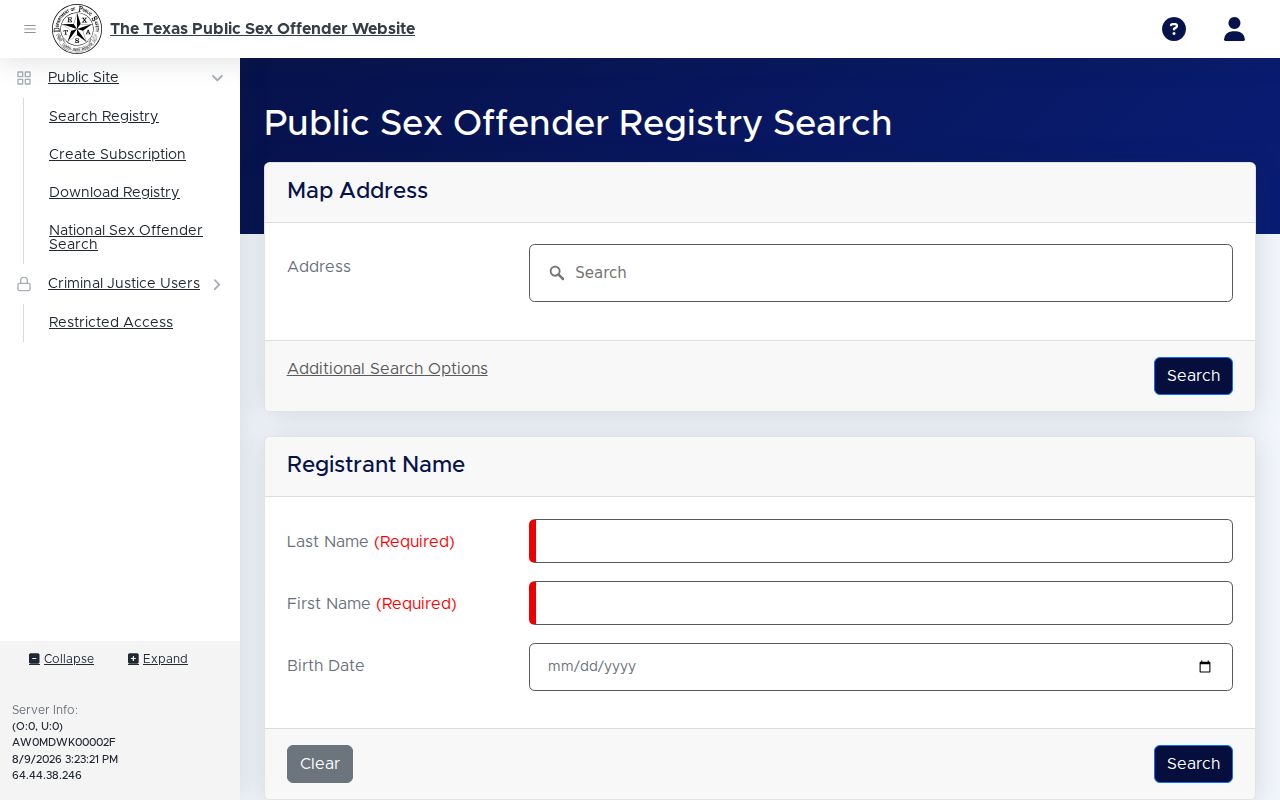
The search controls let a reader narrow Tyler County results without opening or naming any private research subject.
- Open the Texas DPS registry and read its conditions of use.
- Choose a name route or a location route. Enter only the details needed for that route.
- Select Tyler as the county, or enter Woodville, Ivanhoe, Colmesneil, a ZIP, or an address as appropriate.
- Compare multiple public identifiers, then open the matching profile and check its status and verification details.
| Search control | Type | When used | Notes |
|---|---|---|---|
| Last Name | Text | Name search | Full or partial behavior should be checked live |
| First Name | Text | Optional narrowing | Pairs with the name route |
| Address | Text | Location search | Supports an address-proximity route |
| City | Text or selection | Optional | Use the applicable Tyler County city |
| County | Selection | Optional | Select Tyler |
| ZIP | Text | Optional | Five digits |
| Radius | Selection | Address search | Recheck exact options on the live form |
| Search / Clear | Buttons | Form controls | Run the query or reset the fields |
Tyler County and NSOPW
The Texas registry is the focused source for Tyler County. The U.S. Department of Justice National Sex Offender Public Website, or NSOPW, adds a cross-state search layer. It can help when a person recently moved, an address lies near a state line, or the search needs to include more than Texas. NSOPW routes searches to data supplied by participating jurisdictions rather than replacing those jurisdictions' records.
The national interface was also captured for the manifest. It is best used as a second official check after the Tyler County filter on the state system.
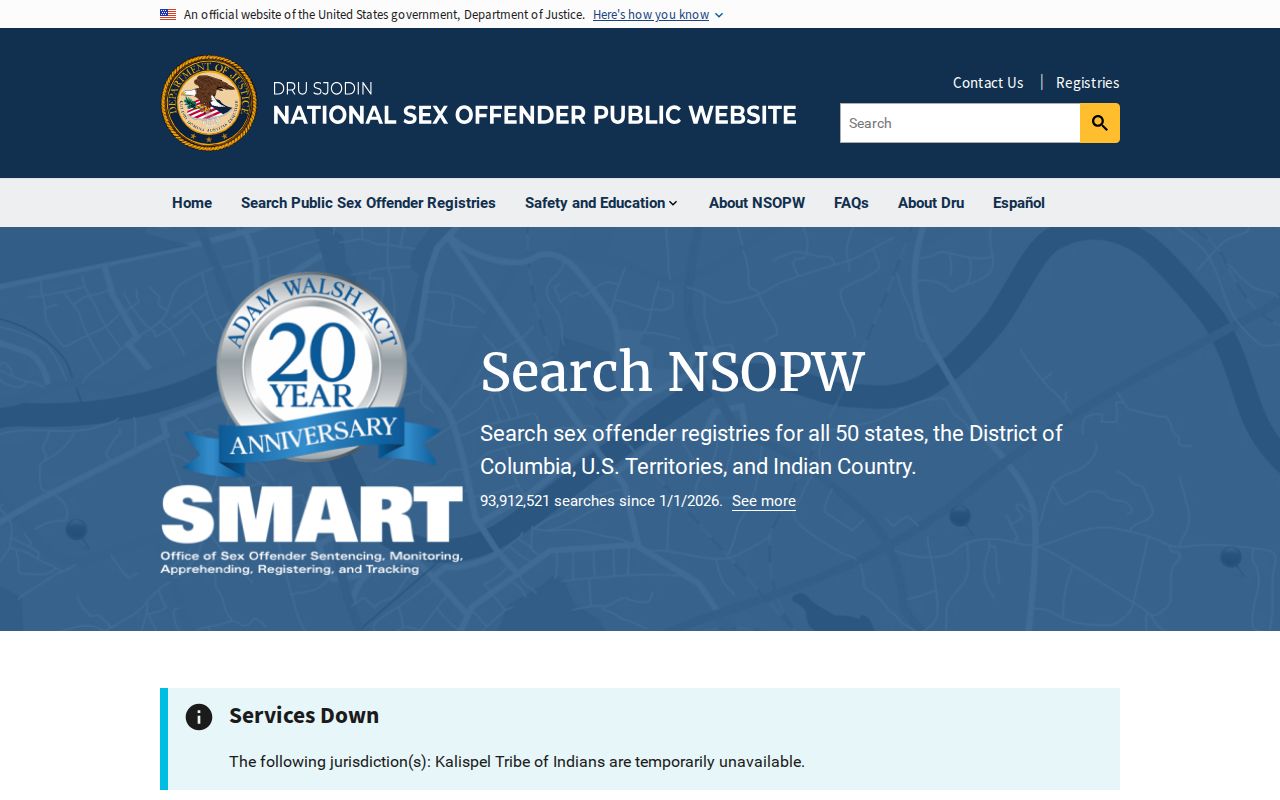
When the two systems appear to differ, check the state profile's update and verification data and ask the responsible registering authority about the discrepancy.
Registry Profiles: What They Show
A Texas public profile can disclose more than a name and address. The fields help a reader distinguish people with similar names and understand the registration event. Texas law also keeps specific information out of public view. No individual profile was opened or identified during the Tyler County research.
| Name and aliases | Reported legal name and other names made public under the registration law. |
|---|---|
| Photo and description | Color photograph plus sex, race, age or birth information, height, weight, hair, eyes, and public marks or tattoos. |
| Registered address | The public reported residence and related location information allowed by law. |
| Offense details | Reportable conviction or adjudication, statute, offense date, and authorized victim-age or category information. |
| Risk and status | Assigned risk level, registration status, and available verification details. |
| Other public fields | Vehicle information and other nonexcluded registration data when the record supplies them. |
| Fields withheld | Social Security and driver-license numbers, phone numbers, workplace details, online identifiers, and other protected data. |
Tyler County Risk and Duration
Texas risk levels describe an assessment of danger. They do not set the registration term. Duration comes from the qualifying offense and the precise rule in Article 62.101. Listed serious or reportable categories generally require lifetime registration. Other qualifying convictions commonly run until the tenth anniversary of release from confinement or discharge from supervision, whichever is later. Juvenile adjudications follow separate rules.
This distinction matters when reading a Tyler County registry profile. A Level 3 designation does not by itself prove a lifetime duty, and a Level 1 designation does not establish a shorter term. Confirm the offense subsection instead of translating the Texas levels into a simple federal tier chart.
Registration Levels and Duties in Texas
Level and verification schedule also answer different questions. Under Article 62.058, a person with two or more sexually violent convictions or deferred dispositions, or one of each, reports at least every 90 days. Other registrants generally verify once each year within 30 days before or after their birthday. The required Texas driver license or identification card must be renewed each year while the duty continues.
| Texas risk level | Public meaning | Duration link |
|---|---|---|
| Level 1 / low | Low danger; unlikely to engage again | Does not determine duration |
| Level 2 / moderate | Moderate danger; may engage again | Does not determine duration |
| Level 3 / high | Serious danger; expected to engage again | Does not itself mean lifetime |
The Texas DPS registration program explains the statewide framework. Its manifest capture adds context to the Tyler County registry search.
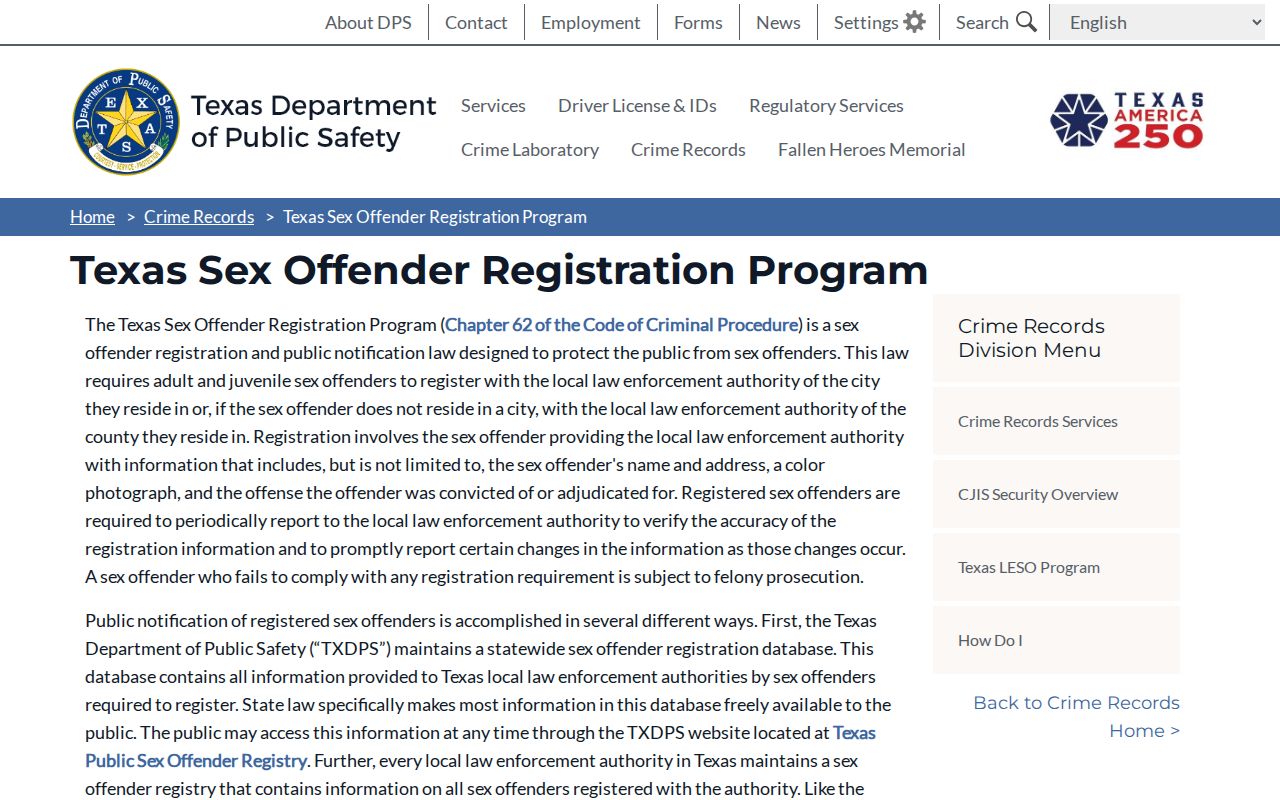
For a specific duty, consult the current statute and the registering authority rather than relying on a risk label alone.
Tyler County Verification Schedules
Verification is an ongoing reporting act, not merely a date shown on a public page. A registrant may have to report a move, status change, or other covered fact between routine visits. The correct local authority depends on city limits, while the frequency depends on the statutory history. Tyler County-specific walk-in hours were not found, so the safe course is to call the proper authority and get current instructions.
An apparently old address should be handled as a possible data issue, not proof of a new offense. Note the public profile's status and verification fields. Then report the concern to the registering authority or law enforcement with the facts observed. Use 911 only when there is an immediate threat.
Note: A registry entry does not reveal whether a current Tyler County warrant exists; verify warrants with the issuing court or law enforcement.
Tyler County Community Notice
Article 62.056 sets a specific Level 3 notice rule. Texas DPS directs mail notice in English and Spanish to non-post-office-box addresses within one mile when the area is unsubdivided, or within three blocks when it is subdivided. Local authorities may also use a newspaper, meeting, posted notice, or specialized site. These steps are separate from a person's routine choice to search the public registry.
The governing Texas Code of Criminal Procedure Chapter 62 is the primary source for registration, verification, disclosure, and notice rules. The statute image assigned to this page records that official source.
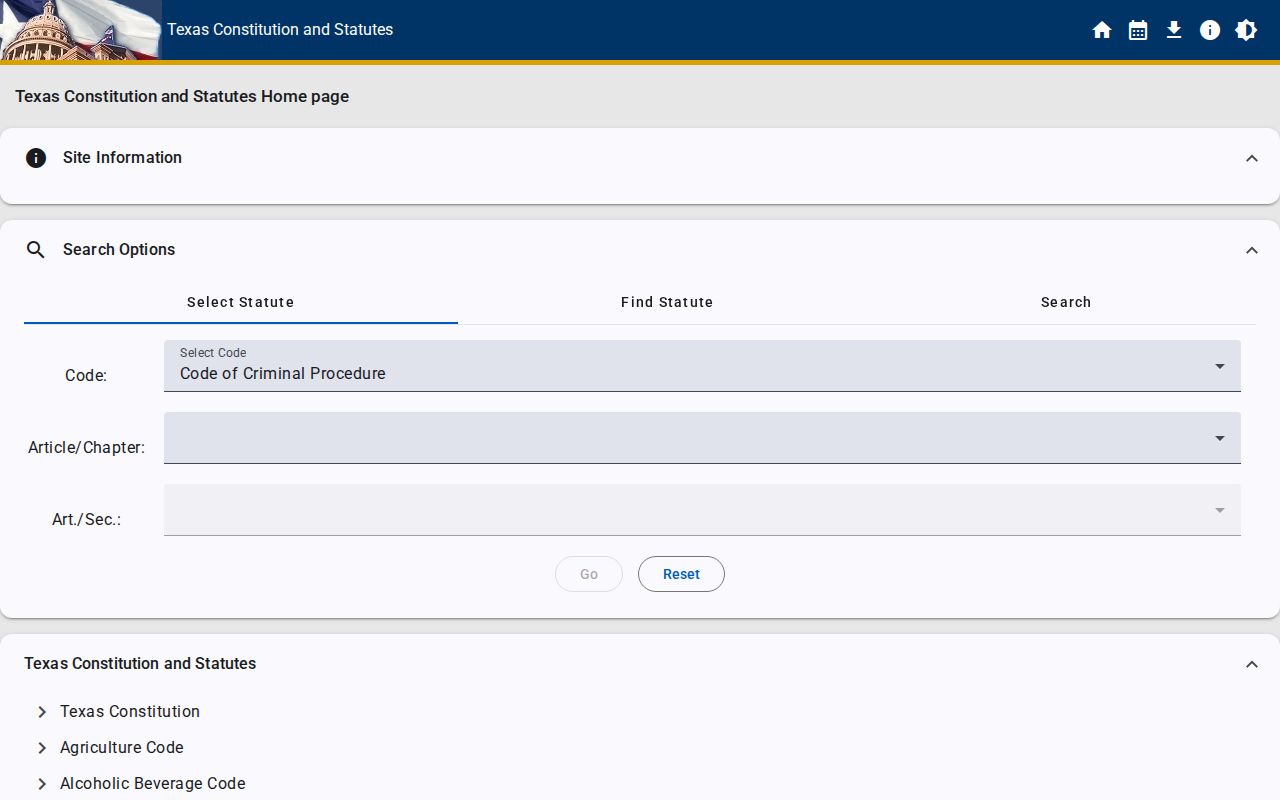
Notice boundaries should be read as statutory delivery areas, not as a prediction that someone lives or travels only within those lines.
Using Registry Information Lawfully
Public registry data supports personal safety and community awareness. It can inform a calm safety plan, help families understand a public notice, and supply verified facts for a report to the responsible agency. It does not grant permission to trespass, publish threats, organize harassment, or interfere with a registrant or household.
Suspected noncompliance should be reported to the proper local registering authority or law enforcement. Give the Tyler County agency the public profile details and the facts that prompted concern. Let officials confirm whether the record is late, incorrect, under review, or linked to a lawful change.
A calm report is more useful than public speculation. Record the date the profile was checked, the exact field that raised concern, and the location information shown by the official registry. Tyler County law enforcement can compare those facts with nonpublic registration data and decide whether follow-up is required.
Use public data safely: Texas Code of Criminal Procedure Chapter 62 does not authorize threats, intimidation, or harassment based on registry information. Report concerns to officials.